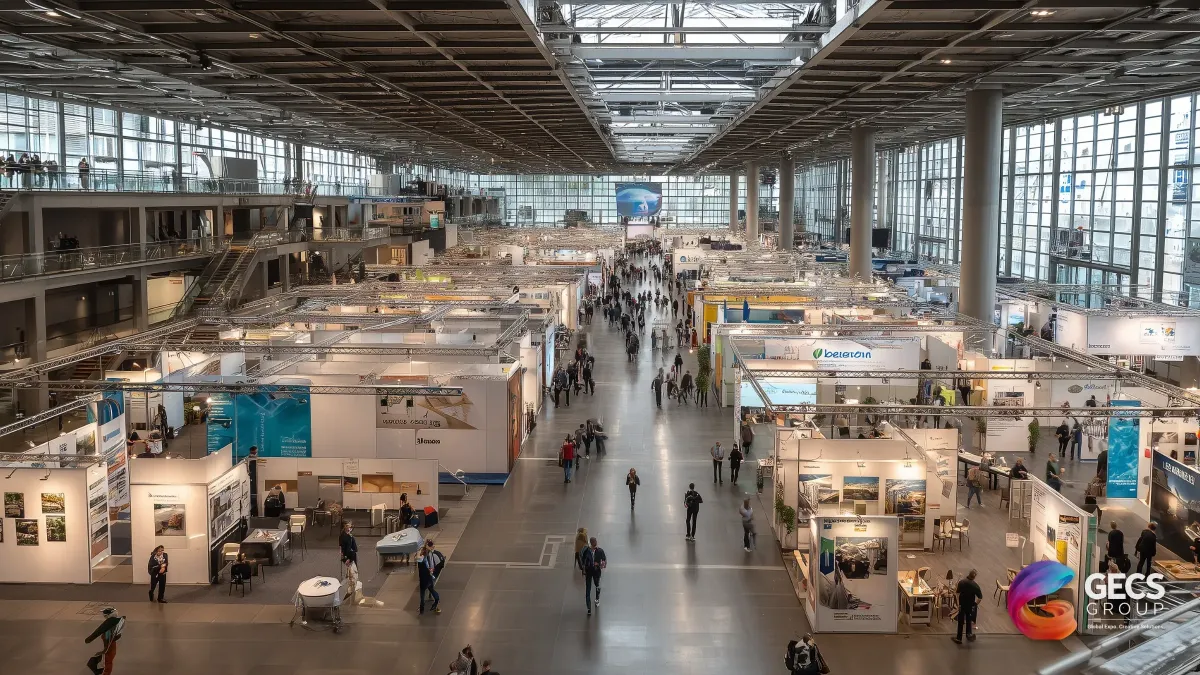
Wine, food, cosmetics, furniture, jewellery and technology: the functions, furniture, utility connections and lighting each sector’s stand cannot do without.
There is no such thing as the perfect stand in absolute terms: there is the right stand for your sector. A winery needs a tasting counter and fridges at the right temperature, a food company needs sinks and refrigerated display cases, a cosmetics brand needs mirrors and perfect light, a jeweller needs secure display cases, a technology company needs electrical power and connectivity. Knowing the needs of your sector avoids costly mistakes and problems with the fair regulations, and makes the stand truly useful for selling.
In this complete guide we look at what you need in stands for wine, food, cosmetics, furniture and design, fashion, jewellery and technology: functions, furniture, utilities, hygiene and safety rules, lighting, materials and the main Italian trade fairs for each sector. For the overall project, also read our guide to stand design.
In short: every sector has essential functions: tasting and temperature for wine, hygiene and utility connections for food, light and mirrors for cosmetics, real room settings for furniture, security and targeted lighting for jewellery, screens, demos and power for technology. The project starts from these functions and from the connections to order from the fair organiser; style comes afterwards.
1. The sector decides the stand’s functions
Functions come before style: what does the visitor do on the stand? Taste, try, touch, sit down, watch a demo, sign an order? Each sector has different answers, and the space must be divided accordingly between display area, trial area, meeting area, hospitality and storage.
The sector also decides the utilities: water and drainage, electrical power, compressed air, internet, and the rules to follow, from food hygiene to the security of valuables. These aspects must be defined at the start, because connections are ordered from the fair organiser weeks in advance and they affect the position of counters and walls.
2. Wine

A wine stand revolves around the tasting counter: a top resistant to liquids and stains, spittoons, glass washers or an area for washing glasses, fridges or wine coolers for whites and sparkling wines, ice buckets, and shelves to display the bottles. Wood and natural materials tell the story of the territory and tradition; photos of the vineyards and cellars take the visitor “there”.
Serving temperature is essential for people to appreciate the wine. As a guide:
| 🍷 Type of wine | 🌡️ Serving temperature | 🧊 What you need on the stand |
|---|---|---|
| 🥂Sparkling wines | 6–8 °C | Fridge, ice buckets |
| 🍾Young whites and rosés | 8–12 °C | Wine cooler or fridge |
| 🍷Full-bodied whites | 10–14 °C | Adjustable wine cooler |
| 🍇Light reds | 14–16 °C | Wine cooler, away from warm lights |
| 🍷Full-bodied reds | 16–18 °C | Cool area, decanter |
| 🍯Sweet and dessert wines | 10–14 °C | Wine cooler |
In the halls the temperature can exceed 25 °C: you need enough fridges and a ventilated storage room, away from spotlights and screens. Buyers need a quiet table to talk about prices and price lists; cases of wine need an accessible storage room. The key trade fairs in Italy are Vinitaly (Verona) and many regional events.
3. Food

For food you need refrigerated display cases, washable work surfaces, sinks with hot and cold water and often hot plates, ovens or coffee machines. Anyone who prepares and serves food at a fair must comply with food hygiene rules (Regulation (EC) 852/2004 and the HACCP system): smooth, washable surfaces, a controlled cold chain, separation between raw and cooked food, hand-wash basins for staff, waste management. The fair and the local health authority (ASL) often require a notification or specific documents: check them in the regulations well in advance.
Utility connections are the critical point: water, drainage and electrical power must be ordered from the fair organiser in good time and positioned in the design. A professional coffee machine draws 2–3 kW, an oven 3–6 kW, a refrigerated display case 0.5–1 kW: adding up all the equipment, you can easily reach 10–15 kW. The key trade fairs are Cibus (Parma), TuttoFood (Milan), Sigep (Rimini) for ice cream and pastry, and Host (Milan) for hospitality.
4. Cosmetics and beauty

In cosmetics, light is everything: LEDs with a high colour rendering index (CRI above 90) to see make-up and skin colours accurately, a neutral colour temperature (about 4000 K), and illuminated mirrors without shadows on the face. White or pastel surfaces, glossy and clean, communicate hygiene and quality.
Typical functions are: displays with tidy testers that are easy to clean, washbasins or wipes for trying products, a treatment or make-up corner with adjustable seats, and a private area for distributors. Testers must be checked and cleaned often, because dozens of people use them every hour. The key trade fair is Cosmoprof (Bologna), one of the most important in the world for the sector.
5. Furniture and design

For furniture, the stand becomes a real room: living room, kitchen, bedroom, office, bathroom. The visitor sits down, touches the materials, opens the drawers, tests the comfort. You need generous heights, floors suited to the setting (parquet, ceramic tiles, carpet) and homely lighting, warm and soft, not shop lighting.
Design stands are often large and complex, with high walls, ceilings and scenic set-ups. The rules of sector fairs are precise: the Salone del Mobile in Milan, for example, sets wall heights, finishes facing the neighbours and percentages of openness towards the aisles. Also read our guide on closed or open stands and the one on custom-made furniture made in Italy.
6. Fashion and accessories

For fashion, the stand is a showroom: clothes rails and mannequins for the collections, tables for sample ranges, large mirrors, fitting rooms to try on garments and a quiet area for buyers’ orders. The light must respect the colours of the fabrics; the stand materials must stay in the background compared with the products. Collections change every season: a stand with neutral elements and graphics that are easy to replace is a good idea. The key trade fairs include Pitti Uomo (Florence), Micam (Milan) for footwear and Mipel for leather goods.
7. Jewellery and watches

For jewellery, what matters are illuminated display cases with laminated safety glass and locks, dark backgrounds (velvet, dark wood, leather) that make the pieces sparkle, targeted spotlights and a private area for negotiations. The stand is often closed or semi-open, with a controlled entrance.
Security is a requirement, not a detail: a safe for the night or a custody service, alarmed display cases, cameras, staff always present, and an insurance policy covering the goods on display at the fair and during transport. The light should be cool and pinpoint for diamonds and silver, warmer for gold. The key trade fair is Vicenzaoro (Vicenza).
8. Technology and industry

Technology and industry stands need screens, LED walls and demo areas to show software, machinery and products in operation. They need a lot of electrical power (sometimes three-phase), a reliable internet connection (wired is better than Wi-Fi in a crowded hall), and sometimes compressed air and water for the machines. Heavy machinery requires checks on the load capacity of the hall floor and lifting equipment.
For demos, plan separate stations where visitors can try things without hurrying, seating for short presentations, and a large screen visible from the aisle with a video that explains the product in a few seconds. There are many key trade fairs: SMAU (digital and innovation), EIMA (agricultural machinery, Bologna), and the mechanical engineering and automation fairs in Milan and Parma. Also read our guide to LED walls, lighting and audio and the one on the virtual stand and virtual reality.
9. Construction, materials and building services
For manufacturers of building materials, windows and doors, flooring, cladding or building systems, the stand is a full-size sample collection. Visitors want to see the material installed, touch the finishes and understand how it is fitted. You need walls and floors that show the products in place, cut-away sections that reveal the internal structure, samples to take away and screens with installation videos. Heavy products (slabs, windows, boilers) require sturdy structures and often lifting equipment for installation. Key trade fairs include MADE expo and Mostra Convegno Expocomfort in Milan, and Cersaie in Bologna for ceramics and bathroom furnishings.
10. Health, pharmaceuticals and services
In health, pharmaceuticals and services (banks, insurance, consulting, software), the product often cannot be seen. The stand must then communicate reliability and expertise: light, clean colours, a few clear messages, screens with data and real case studies, many stations for calm conversations, and private rooms for meetings and negotiations. Visitor privacy is important: conversations on health or financial topics require separate spaces and correct handling of the data collected. In the medical sector, specific rules on the communication of medicines and devices also apply.
11. Summary table by sector
| 🏭 Sector | 🧩 Essential elements | 🔌 Utilities to order |
|---|---|---|
| 🍷Wine | Tasting counter, fridges, glass washers, shelving | Electricity, water (recommended) |
| 🍝Food | Refrigerated display cases, sinks, work surfaces, hand-wash basins | Water, drainage, a lot of electrical power |
| 💄Cosmetics | CRI 90+ lighting, illuminated mirrors, testers, treatment corner | Electricity, water (for washbasins) |
| 🛋️Furniture and design | Realistic room settings, homely lighting, space to sit down | Electricity, sometimes water (kitchens, bathrooms) |
| 👗Fashion | Clothes rails, mannequins, fitting rooms, mirrors | Electricity |
| 💍Jewellery | Security display cases, targeted lighting, private area | Electricity, alarms, surveillance |
| 💻Technology and industry | LED walls, screens, demo area, machines | Three-phase power, wired internet, compressed air |
💬 Preparing for a trade fair in your sector? Tell us which one: we will suggest a stand with all the functions you need. Ask for a proposal →
12. Utility connections: a schedule to respect
Every fair organiser sets a deadline for ordering electricity, water, drainage, internet, compressed air and ceiling rigging points. After that date, services cost more or are no longer guaranteed. A typical schedule is: design and equipment list 3–4 months before; ordering connections 6–8 weeks before; sending the technical design to the fair organiser for approval; checking on site during build-up. Adding up the power of all the equipment correctly avoids the most common problem: the circuit breaker tripping on the first day when the oven, fridges and lights are switched on together.
13. One stand for several fairs and sectors
Many companies take part in fairs in different sectors: a food producer at a food fair and at a retail trade fair, a furniture company at a design fair and at a hospitality fair. In these cases a modular stand is a good idea, with a shared structure and image, and specific furniture (fridges, display cases, demo counters) to add or rent depending on the fair. Read our guide to exhibition stand rental.
14. The most common mistakes
- Copying a stand from another sector. Nice-looking, but without the functions you need.
- Ordering connections late. Without enough water or power you cannot work.
- Underestimating electrical power. Everything trips at the busiest moment.
- The wrong lighting. Food, skin, fabrics and jewellery look worse than they are.
- No storage room. Stock, boxes and glasses take over the display space.
- Neglecting hygiene and security. Inspections, complaints or thefts ruin the fair.
Frequently asked questions
Quick answers to the questions we hear most often
Do you have experience in several sectors?
Yes, we design stands for food, wine, furniture, cosmetics, fashion and industry.
Can the same stand be used at fairs in different sectors?
The structure can, if it is modular; specific furniture (fridges, display cases) is added or rented.
How much electrical power does a food stand need?
It depends on the equipment: you add up the power of ovens, fridges, coffee machines and lights; a stand with a kitchen easily exceeds 10 kW.
Do you need permits to serve food at a fair?
Often yes: you must comply with HACCP rules and the procedures set by the fair organiser and the local health authority.
Which lighting should I choose for jewellery?
Pinpoint LED spotlights with high colour rendering: cooler light for diamonds and silver, warmer for gold, always on dark backgrounds.
Do you also handle the utility connections with the fair organiser?
Yes, we calculate them and order them in good time. Also discover our turnkey stand service.
Want a stand designed for your sector?
We design stands for wine, food, cosmetics, furniture and industry, made in Italy and installed across Europe.