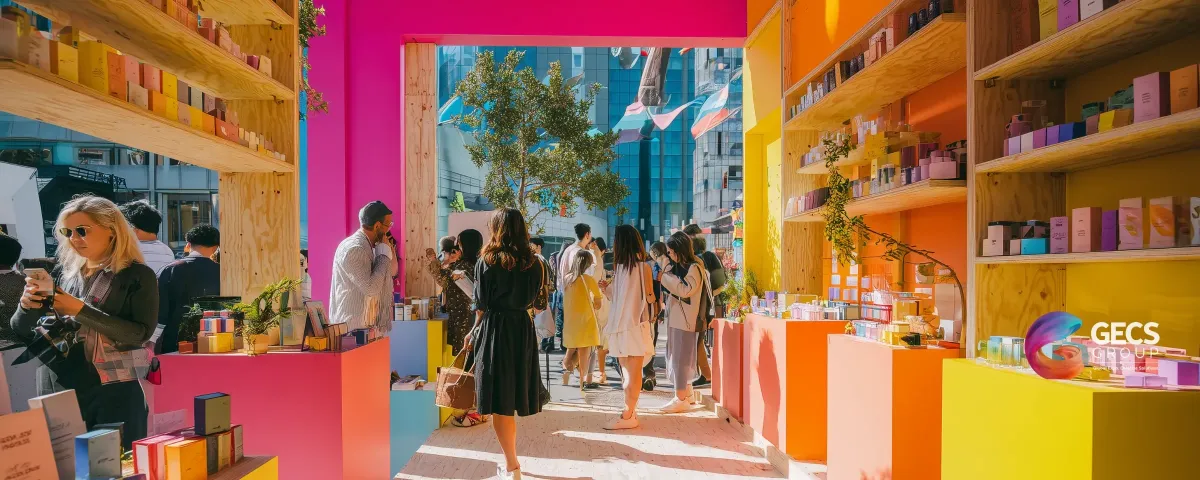
How to open a pop-up store or temporary shop: location, concept, modular and demountable furniture, permits, timing and indicative costs.
A pop-up store, or temporary shop, is a shop that opens for a limited period: a weekend, a month, a season. It is the quickest way to test a city, launch a product, clear a collection or introduce a brand born online. It costs much less than a permanent shop, but to work it must be designed with the same care: the right location, a clear concept and furniture that installs quickly.
In this guide we look at when it pays to open a temporary shop, how to choose location and duration, how to design the concept, which furniture to use, which permits are needed and how much it costs. For a permanent shop, also read our guide to shop fit-outs.
In short: a pop-up store works if it has a precise goal (selling, launching, testing), a location with footfall, a concept recognisable in a few seconds and modular furniture that installs in 1–2 days and can be reused. The cost depends mainly on rent, duration and fit-out.
1. What a pop-up store is and when it pays

A pop-up store is a shop with a time limit: it opens in a vacant space, a shopping centre, a station, at an event or even in a container, and closes after days or weeks. It pays when you want to:
- Test a market before signing a lease for years.
- Launch a product or a collection with an event that gets people talking.
- Take a digital brand offline: customers touch the product and meet the people behind the brand.
- Sell in peak season: Christmas, sales, summer in tourist resorts.
- Clear stock with a temporary outlet.
The difference between pop-up store and temporary shop is mostly one of usage: “pop-up” is used for short, high-impact openings, “temporary shop” for longer temporary stores, even several months. The design follows the same rules.
2. Where to open it: location and duration

The location decides half the result. What matters is the footfall of your target audience, not just the numbers: a shopping street, a shopping centre, a station or airport, a trade event, a tourist resort.
| 🏷️ Location | 📍 Advantages | ⏳ Typical duration |
|---|---|---|
| 🛍️Vacant shop in the centre | Street-facing window, strong image | 1–6 months |
| 🚉Station or airport | Very high footfall, customers in a hurry | 2–8 weeks |
| 🏬Shopping centre | Steady flows, services included | 1–12 months |
| 🎪Event, trade show, festival | An already interested audience | 1–10 days |
| 🌐Digital + physical space | Online orders with in-store pickup | Variable |
The shorter the opening, the more important it is that the fit-out installs and dismantles quickly: every day of installation is a day of rent without sales.
3. Concept and design

A pop-up store must be recognisable in three seconds, even by people walking past without stopping. These work well:
- One dominant colour or a strong material that becomes the brand’s signature.
- A few hero products on plinths instead of full shelves.
- An experience: product trial, personalisation, tasting, a photo corner to share on social media.
- A simple path: entrance, products, till, with no dead zones.
The rules of visual merchandising apply here too, but in concentrated form: fewer products, more space, more impact.
4. Modular, demountable furniture

The heart of a good temporary shop is modular furniture: cubes, plinths, walls and shelving that install without building work and adapt to different spaces. Advantages:
- Installation in 1–2 days and dismantling in a few hours.
- Reuse for subsequent openings in other cities: the cost is split across several pop-ups.
- No damage to the premises: no holes, no building work, clean handover.
- Easy transport: modules travel flat in a van.
We produce modular furniture in plywood, lacquered MDF and metal, with interchangeable graphics: the same kit changes its look every season. Also read our guide to custom shop furniture.
💬 Thinking about a pop-up store? Tell us your product, city and dates: we will propose modular furniture ready to install. Ask for a proposal →
5. Graphics, lighting and the window

In a pop-up, the window is the main advertising. A large printed graphic, a few words and well-aimed lighting do more than any flyer. Use:
- Fabric graphics or removable vinyls, easy to put up and take down.
- LED spotlights on track or clip-on, without touching the premises’ electrical system.
- A temporary sign, illuminated if possible, if regulations allow.
For window ideas, read our guide to shop window displays.
6. Timing, permits and costs

For a temporary shop in Italy you usually need: a transitional lease or temporary concession contract, a notification of start of activity to the municipality (SCIA or notification for temporary sales, depending on local rules), and any permits for signs and use of public land. In shopping centres and stations, the operator sets the rules, installation hours and permitted materials.
Indicative fit-out costs for a 20–40 m² pop-up (rent excluded):
| 💶 Item | 📏 Basic solution | 💡 Custom solution |
|---|---|---|
| 📦Display furniture | €3,000–6,000 | €8,000–20,000 |
| 🪵Walls and cladding | €1,000–3,000 | €4,000–10,000 |
| ✨Graphics and lighting | €800–2,500 | €3,000–8,000 |
| 🏗️Transport and installation | €800–2,000 | €2,000–5,000 |
If the furniture is reused for three or four openings, the cost per pop-up drops sharply. Timing: 3–5 weeks from design to delivery for custom furniture, 1–2 days of installation.
Mistakes to avoid
- A location without the right audience. Lots of footfall is not enough if it is not your target.
- Too many products. A full space looks like a warehouse, not an event.
- Furniture designed for one use only. Money is thrown away at every opening.
- Permits at the last minute. Sign and activity must be notified beforehand.
- No contact collection. The pop-up ends, the customers must stay: newsletter, social media, online orders.
Pop-up store formats
The name pop-up store covers very different formats in size, duration and goal. Choosing a clear one from the start helps set budget, furniture and communication.
| 🏪 Format | ⏱️ Typical duration | 📐 Floor area | 🎯 Main goal |
|---|---|---|---|
| 🛍️Temporary street shop | 1–6 months | 30–150 m² | Test a city or neighbourhood, sell a collection |
| 🏬Shopping centre corner | 1–3 months | 10–40 m² | Seasonal sales, Christmas, product launch |
| 📦Container or kiosk | Days or weeks | 10–30 m² | Events, festivals, beaches, squares |
| 🧩Temporary shop-in-shop | Weeks or months | 5–30 m² | Presence inside a shop or department store |
| ✨Experiential showroom | Days or weeks | 50–300 m² | Let people try the product, generate content and contacts |
Each format has different needs: an outdoor container needs weather-resistant materials, a shopping centre corner must comply with the centre’s technical manual, and an experiential showroom focuses on set design, lighting and technology more than on the merchandise on display.
Typical pop-up store budget
The cost of a temporary shop depends mainly on rent and fit-out. The table shows how spending is usually distributed for a 40–60 m² temporary shop open for two or three months in a medium-sized Italian city.
| 🧾 Item | 💶 Indicative range | 📌 Notes |
|---|---|---|
| 🏠Temporary rent | €3,000–15,000 per month | Varies greatly by city and street |
| 🪑Modular furniture and fit-out | €10,000–30,000 | Much lower with rental or reuse |
| 🖼️Graphics, window vinyls and sign | €1,500–5,000 | Temporary sign without building work |
| 💡Lighting | €1,500–4,000 | Rented or reusable tracks and spotlights |
| ⚡Services and minor works | €1,000–5,000 | Sockets, internet connection, painting |
| 📣Communication and launch | €2,000–8,000 | Social media, opening events, press office |
The most effective way to keep costs down is a reusable furniture kit that can be installed and dismantled in a few days in different locations. The first pop-up costs more, the following ones much less.
An example: a chocolate brand’s Christmas pop-up
An artisan chocolate company wants to sell directly to the public over Christmas in three cities. It designs a furniture kit in natural wood and cocoa-coloured lacquer: a counter with a refrigerated showcase, two display walls with shelves for gift boxes, a central table for tastings, and an entrance portal with an illuminated logo. All elements are modular and adapt to premises from 25 to 50 m².
The kit is produced in five weeks and installed in two days in each city. At the end of the season it is dismantled and stored for the following year, with the addition of new graphics. The kit costs roughly €18,000–28,000, amortised over three pop-ups a year for several seasons. The company also gathers customer and sales data that help it decide where to open a permanent shop in future.
How to measure a temporary shop’s success
A pop-up is not judged on sales alone. Before opening, it is worth setting measurable goals: number of visitors, sales, average receipt, new newsletter or app sign-ups, content posted by customers on social media, contacts with retailers or partners. A simple people counter at the entrance, a till system that records sales by product and a form to collect contacts are enough to get useful data. At closing, results are compared with costs to decide whether to repeat the experience, change location or turn it into a permanent store.
Pop-up stores and trade shows: the same logic
Many companies use the same furniture kit for both pop-ups and trade shows, with small adaptations. It is a smart choice: the needs are similar (quick installation, simple transport, strong image) and one investment serves two channels. To learn more, read our guides to modular aluminium stands and shop-in-shop and corners.
Checklist for opening a pop-up store
- A clear goal: selling, testing a city, launching a product or collecting contacts.
- The right location: footfall, an audience consistent with the brand, window visibility.
- A suitable contract: duration, ancillary costs, option to extend, conditions for returning the premises.
- Permits: notification of start of activity, sign, any use of public land.
- Furniture kit: modular, quick to install, requiring no building work.
- Services: electrical power, internet connection for till and payments, lighting.
- Staff: trained on the product and the brand story.
- Communication: announcement before opening, launch event, social content throughout.
- Measurement: data on visits, sales and contacts to decide the next steps.
In summary
A pop-up store is a flexible tool for selling, raising awareness or testing a market with limited investment and risk. Success depends on a clear goal, a suitable location, a fit-out with impact that is quick to install and communication that builds anticipation before opening. With a reusable furniture kit, each new opening costs less and takes less time.
Frequently asked questions
Quick answers to the questions we hear most often
Can a pop-up be opened in a vacant shop?
Yes, it is one of the most common formulas: many owners let empty premises for short periods with transitional leases.
How much does a pop-up store cost?
For a 40–60 m² temporary shop for two or three months, including rent, fit-out and communication, you start at roughly €25,000–40,000; with a reusable kit, subsequent openings cost much less.
Is it better to buy or rent the furniture?
For a single opening, rental is often more cost-effective; if several pop-ups in different cities are planned, an owned custom kit pays for itself quickly and strengthens the brand image.
How long does a pop-up store last?
From a weekend to six months; the most common openings last 2–8 weeks.
Do you need a VAT number for a temporary shop?
Yes, whoever sells must be a registered business; for the rules on temporary sales, it is best to consult your accountant and the municipality.
How long does it take to install a pop-up store?
With ready-made modular furniture, 1–2 days; with custom work in the premises, up to a week.
Can the furniture be rented?
Yes, for short openings rental is an option; for several openings an owned, reusable kit is better.
Do you work throughout Italy and abroad?
Yes, we produce in Italy and install pop-up stores in Italy and Europe.
Does the kit adapt to different premises?
Yes, the modules can be combined differently according to each shop’s floor plan.

Want to open a pop-up store?
We design and produce in Italy modular furniture for temporary shops, install it in a few hours and reuse it for the next openings.