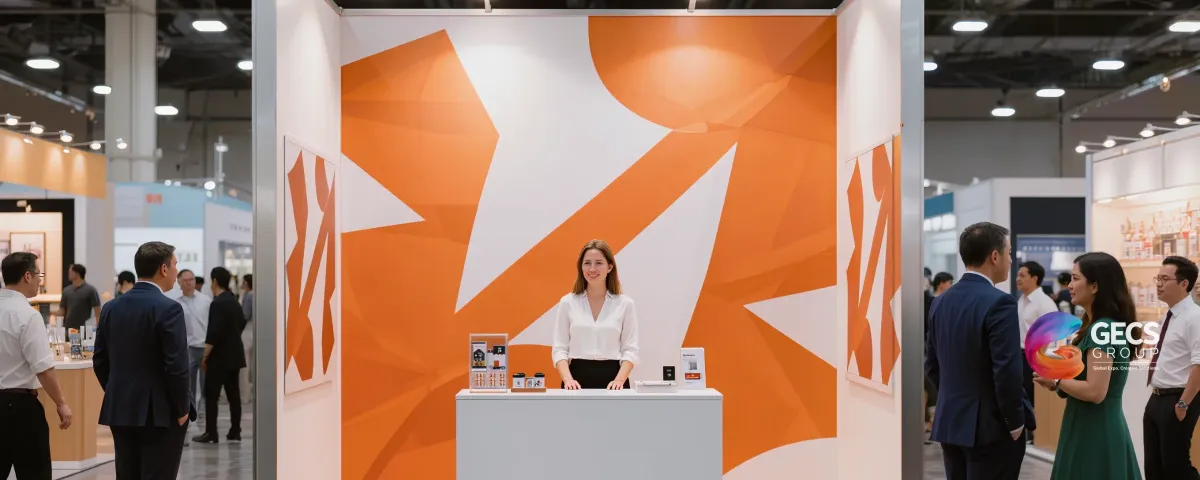
How to get a cheap but effective exhibition stand: shell scheme, hire, modular systems, fabric and cardboard, where to save and indicative prices.
For many companies a trade show is a major investment and the budget is limited. The good news: a low-cost stand can make an excellent impression if you choose the right system and spend where visitors actually look.
In this guide we look at budget solutions, indicative prices, where to save and where not to. For a complete picture of costs, read how much an exhibition stand costs.
In short: the cheapest solutions are the organiser's shell scheme, hire and modular aluminium systems with fabric graphics. Save on structures, furniture and square metres; don't save on graphics, lighting and staff.
1. Budget solutions

| 🧱 Solution | 💶 Indicative price | 👍 Advantage |
|---|---|---|
| 📦Organiser's shell scheme | €60–120/m² | No hassle, already included |
| 🔁Modular stand hire | €90–180/m² | No purchase, installation included |
| 🧩Owned modular system | from €2,500 (3×3) | Reusable at many shows |
| ♻️Cardboard stand | €100–200/m² | Light, recyclable, eye-catching |
2. Hire and modular systems

Hire is ideal for those who do one or two shows a year: you only pay for the graphics and the service. If you do many shows, it pays to buy a modular aluminium system with printed fabric graphics: it goes up in a few hours and can be reconfigured for stands of different sizes.
3. Graphics: the real investment

Visitors don't see the structure, they see the graphics. A few big messages, quality photos, the logo high up and well lit: even a 9 m² stand looks professional. Fabric graphics cost less than rigid panels, can be washed and are shipped folded.
4. Where to save and where not to

| ✅ Item | ❌ Can you save? | 💡 Advice |
|---|---|---|
| 🖼️Graphics | No | Quality printing, short texts |
| 💡Lighting | No | LED spotlights on products and logo |
| 🪑Furniture | Yes | Hire counter, stools and display cases |
| 🚚Transport | Yes | Light systems in compact cases |
💬 Got a limited budget for your next show? Tell us the floor area, the show and the amount available: we will propose the best solution for that budget. Ask for a proposal →
5. Tips for spending less

- Choose the size carefully: a well-made 3×3 or 4×3 stand is worth more than a large empty one.
- Prefer a corner if the price is similar: two open sides, more visibility.
- Reuse structure and furniture and change only the graphics.
- Book early: space, materials and installers cost less.
- A single supplier for design, production, transport and installation.
6. Budget examples

A hired 3×3 stand with graphics, counter, two stools, spotlights and installation: roughly €1,800–3,000. An owned 4×4 modular stand with backlit fabric graphics: €5,000–9,000 the first time, then only graphics and installation. To work out whether the expense is worth it, read our guide to trade show ROI.
7. Buy or hire: the three-year calculation
The question we are asked most often is whether it pays to buy a modular stand or hire one each time. The answer depends on how many shows you do a year and how often you change your image. Here is an example with a 4×3 stand (12 m²) and indicative prices consistent with those above.
| 🧮 Item | 🔁 Hire for each show | 🧩 Owned system |
|---|---|---|
| 💶Initial cost | €0 | about €5,000 (structure, fabrics, counter) |
| 🖼️Graphics per show | included or €400–700 | €400–700 if you change the fabrics |
| 🛠️Build-up and dismantling | included | €600–900 per show |
| 📦Annual storage | €0 | €300–600 |
| 📅3 shows a year for 3 years | about 9 × €1,800–2,500 | €5,000 + 9 × €1,000–1,600 + storage |
In this example, with one or two shows a year hire remains simpler and cheaper. With three or more shows a year, an owned system usually pays for itself within the second year, especially if the stand sizes are similar. There is also a less visible advantage: with an owned stand the image stays consistent at every show, and visitors recognise the company from one event to the next.
8. The hidden costs that blow the budget
Many "cheap" stands become expensive because of items that don't appear in the first quote. Before comparing two offers, check that these costs are included, or at least estimated:
- Power connection and consumption: sold separately by the organiser and to be ordered by a deadline.
- Registration fee and mandatory services: insurance, cleaning, catalogue listing.
- Carpet: in some halls it is not included with space only.
- Transport there and back, including any handling inside the venue.
- Build-up crew travel: travel, meals and accommodation for distant shows.
- Disposal of non-reusable graphics and materials.
- Stand staff: travel and hotel nights, which cost much more in show weeks.
In our quotes each item is listed separately, so customers can immediately see what is included and what is paid to the organiser.
9. The right layout for a small stand
With 9 or 12 m² every choice counts. A small stand works when visitors understand in three seconds who you are and what you sell. The rules we apply in our designs:
- Back wall with a single message: logo, one sentence saying what you do and a strong image.
- Counter at the side, not in the middle: it keeps the space open to the aisle and invites people in.
- Products at eye level, on shelves or in a lit display case, never on the floor.
- A small storeroom even in a 3×3: one square metre with a curtain is enough to hide bags, catalogues and coats.
- Light on the important parts: two or three LED spotlights on the graphics and products are worth more than any furniture.
If the stand is on a corner, use both open sides: graphics on both fronts and the counter placed in the corner, so it can be seen from two aisles.
10. Lightweight materials: fabric, aluminium and cardboard compared
Weight affects transport and installation time, two items that weigh heavily on the budget. The three materials most used for budget stands have different characteristics.
| 🧱 Material | 👍 Strengths | ⚠️ Watch out for |
|---|---|---|
| 🧵Printed fabric on aluminium frame | Light, bright colours, can be backlit, washable | Needs a precise frame: a badly tensioned fabric looks cheap |
| 🔩Modular aluminium systems | Fast installation, reconfigurable for different sizes | The standard look must be personalised with graphics and lighting |
| ♻️Honeycomb cardboard | Very light, recyclable, direct printing | Sensitive to humidity and knocks; less suited to many shows |
| 🪵Wood or MDF panels | Solid, custom look | Heavier and more expensive to transport and install |
To choose the right panel when you need a wooden part, read our guide on plywood or MDF. In any case, all materials must have the fire reaction class required by the show's technical regulations: always ask the supplier for the certificate.
11. How to read and compare quotes
Two quotes with the same final price can contain very different things. To compare them properly, ask each supplier to state:
- exact dimensions, wall height and type of structure;
- material and printing technique for the graphics, with the number of fabrics or panels;
- number and type of spotlights, and whether internal wiring is included;
- furniture included (counter, stools, display cases, storeroom);
- transport, build-up, dismantling and crew travel;
- who submits the design to the organiser and who provides the certificates.
Be wary of quotes with a single "complete stand" line: they are the ones where the extras arrive later. A detailed quote is also useful if you take part with public funding: see our guide to SIMEST funding for trade shows.
12. Checklist for your first show on a limited budget
- Set a measurable goal, for example 40 qualified contacts.
- Choose the smallest size that lets you show your main products.
- Book early to get a corner or a position near a major walkway.
- Invest in graphics and lighting, save on furniture and square metres.
- Ask for a complete quote, including transport and installation.
- Prepare a simple way to collect contacts, even just a form on a tablet.
- Plan the follow-up: contacts should be called back within a week of the show.
13. The organiser's shell scheme: how to make it less anonymous
The shell scheme stand offered by the organiser is the cheapest solution, but it has a flaw: it is identical to the one next door. White walls, a fascia with your name, a table and two chairs. With a few targeted touches it can become a recognisable space without changing the structure.
- Adhesive or fabric graphics on the walls: printed to the size of the panels, they cover the white and bring in the brand colours. Before ordering, ask the organiser for the exact panel sizes and fixing rules.
- A branded counter instead of the standard table: it is the first thing visitors look at.
- Extra spotlights on the main graphic: shell schemes often have weak general lighting.
- A vertical display for products, so the floor stays clear.
- A screen with a short silent video showing the product in use.
With a modest extra spend, the shell scheme stops looking like a fallback. It is a good solution for a first show, when you don't yet know whether the event will deliver results.
14. A typical example: from budget to design
To show how we reason, here is a typical case we often encounter. A manufacturer takes part in an industry show for the first time with a 4×3 metre corner space and a budget of about €4,000 for the stand, excluding the organiser's space and services.
- Structure: hired modular aluminium system, 2.5-metre-high walls on two sides.
- Graphics: printed fabric with one main message and a large product photo, backlighting only on the logo wall.
- Furniture: branded counter bought, because it will be reused at the next shows; stools and display case hired.
- Lighting: LED spotlights on the products and the side graphic.
- Services: transport, build-up and dismantling with a two-person crew.
The result is a stand that looks custom-made, with one part (counter and graphics) already ready for the next show. The budget stays under control because the costly choices are concentrated on what visitors see, while the structure is standard.
Mistakes to avoid
- Saving on graphics. The stand looks improvised.
- No lighting. In dark halls the stand disappears.
- Too many products. A small space becomes confusing.
- Incomplete quotes. Transport and installation come later.
- Choosing on price alone. Delays and problems at the show cost more.
Frequently asked questions
Quick answers to the questions we hear most often
How much does the cheapest exhibition stand cost?
The organiser's shell scheme starts at around €60–120/m²; a hired 3×3 with graphics from about €1,800.
Is it better to buy or hire?
With one or two shows a year, hire; from three upwards, an owned modular system often pays off.
Does a cheap stand look bad?
No, if graphics and lighting are well done: visitors judge the image, not the structure.
Does the price include installation and transport?
In our quotes, yes: we list every item clearly.
Do you work throughout Italy and Europe?
Yes, we produce in Italy and build throughout Italy and Europe.
How much does a complete 3×3 stand cost?
Hired, with graphics, counter, two stools, spotlights and installation, roughly €1,800–3,000, excluding the space and power connection sold by the organiser.
How many times can a modular stand be reused?
Aluminium structures last many years; usually only the fabrics are changed when the messaging or the stand size changes.
Can I customise the organiser's shell scheme stand?
Yes, with made-to-measure graphics for the panels, a branded counter and extra spotlights. Ask the organiser about sizes and fixing rules first.
How far ahead should I order a budget stand?
At least 4–6 weeks before for hire and graphics; for an owned modular system 2–3 months is better, to allow time for design and production.

Want a budget stand that doesn’t look cheap?
We offer modular and hire stands with quality graphics, built by our crews throughout Italy and Europe, with a clear quote and no surprises.