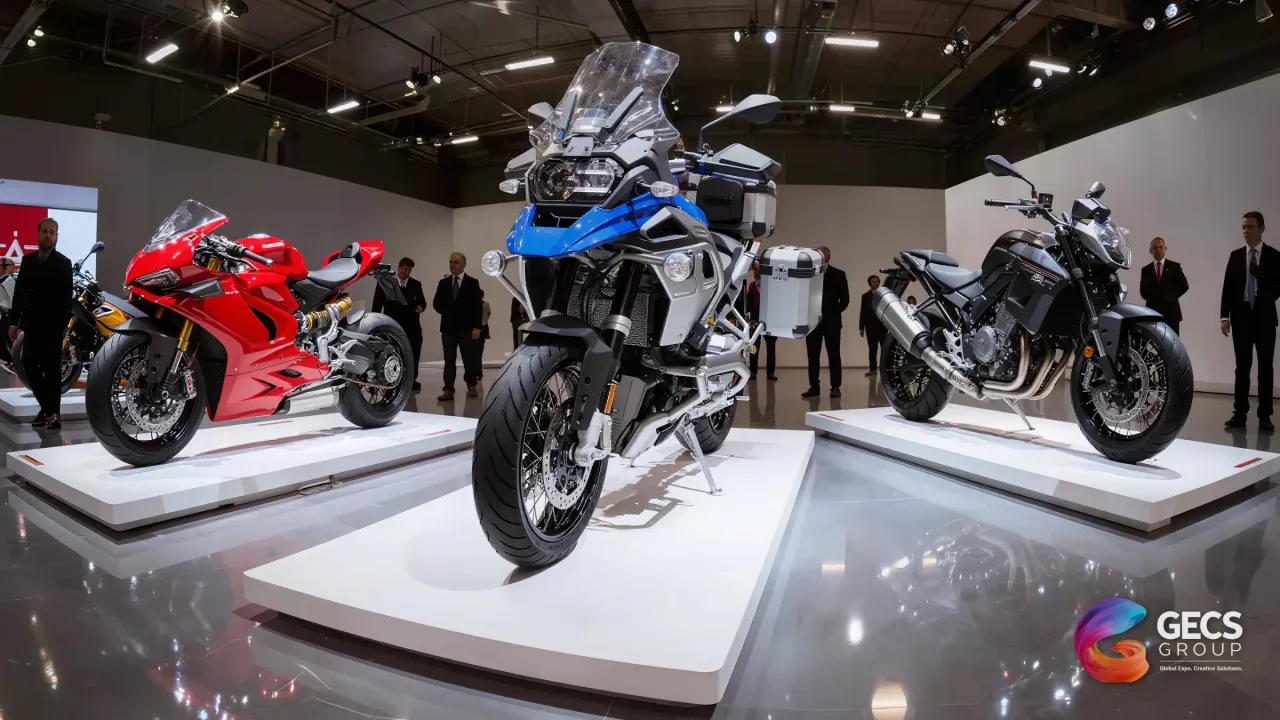
EICMA Milan: guide to the motorcycle fair and how to exhibit
2026 edition figures, how to exhibit at EICMA, which stand works and what is needed to build it at Fiera Milano Rho.
Reading time: about 14 minutes · Updated November 2026
EICMA is the largest fair in the world dedicated to motorcycles, scooters, bicycles and their world: components, clothing, accessories and electric mobility. It is held every year in Milan, in the Rho district, and the edition that has just ended, the 83rd, closed with record numbers. This page is a guide to the fair, not to the venue: how it is laid out, who visits it, how to exhibit, which stand works and what is needed to build it. For information about the place (transport, technical rules, services) there is the guide to Fiera Milano Rho; for the map of the whole country, the guide to trade fairs in Italy.
We write as people who build the stands: GECS Group (a brand of GSR ITALY SRL) designs, produces in Padua and installs exhibition stands across Europe, and knows the rhythm of a fair where, on the evening before opening, every centimetre must be ready.
📌 In brief
EICMA 2026 (83rd edition) took place from 3 to 8 November at Fiera Milano Rho: 3 and 4 November reserved for press and trade, 5–8 November open to the public. The organisers report over 600,000 attendances, 10 halls, over 300,000 m² of indoor and outdoor space and about 765 exhibitors from 52 countries. The dates of the 2027 edition have not yet been published by the organiser: wait for the official announcement.
🏍️ What EICMA is
EICMA is the Esposizione Internazionale Ciclo e Motociclo (International Bicycle and Motorcycle Exhibition). It began as a trade show and over time became the showcase where manufacturers present the year's novelties: motorcycles, scooters, e-bikes, technical clothing, helmets, spare parts, accessories and mobility technologies. The organiser is EICMA S.p.A., linked to the ANCMA trade association.
The audience is twofold. The first two days are for press and trade professionals: buyers, dealers, distributors, journalists. On the other days the fair opens to enthusiasts, and the number of visitors jumps. For exhibitors this means the same stand has to work in two different ways: first as a business room, then as a stage for thousands of people.
📊 The numbers of the 2026 edition
| Item | 2026 edition |
|---|---|
| Edition | 83rd |
| Dates | 3–8 November 2026 |
| Trade and press days | 3 and 4 November |
| Public days | 5–8 November |
| Venue | Fiera Milano Rho |
| Total attendance | over 600,000 (+6% according to the organiser) |
| Halls | 10 |
| Area | over 300,000 m² indoor and outdoor |
| Exhibitors | about 765, from 52 countries |
| Brands present | about 2,100 |
| Trade professionals | over 51,000, from 168 countries |
Figures released by the organiser at the end of the 2026 edition. They may be rounded or updated. The 2027 edition does not yet have official dates.
The 2025 edition had already passed 600,000 attendances, with 9 halls and about 43,000 trade professionals from 167 countries. 2026 adds a hall and a larger share of foreign trade visitors: a sign that the fair keeps growing as a business event too.
🗓️ When will EICMA 2027 be held
At the time of writing, the organiser has not published the dates of the 2027 edition. Some calendar sites list indicative dates, but they are not official and should not be used to book trains, hotels or build teams. The rule is always the same: wait for the EICMA S.p.A. announcement and check the official website.
What can be expected, from experience, is the pattern: the fair takes place in November, with two days for trade and press and four for the public. If you exhibit, the time to make decisions about the stand is well before the final dates: design and production take weeks.
🧩 What is exhibited at EICMA
The world of EICMA is wider than it seems. Besides motorcycles proper, there is room for:
- Motorcycles and scooters of every engine size, from the urban commuter to the racing bike.
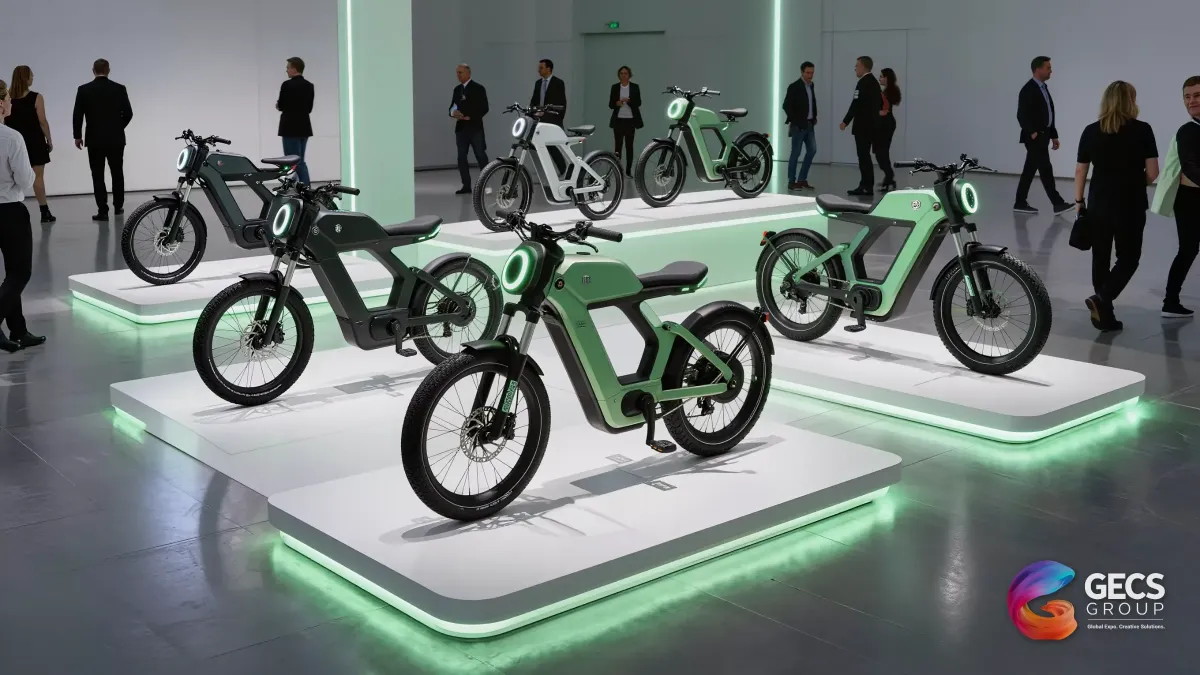
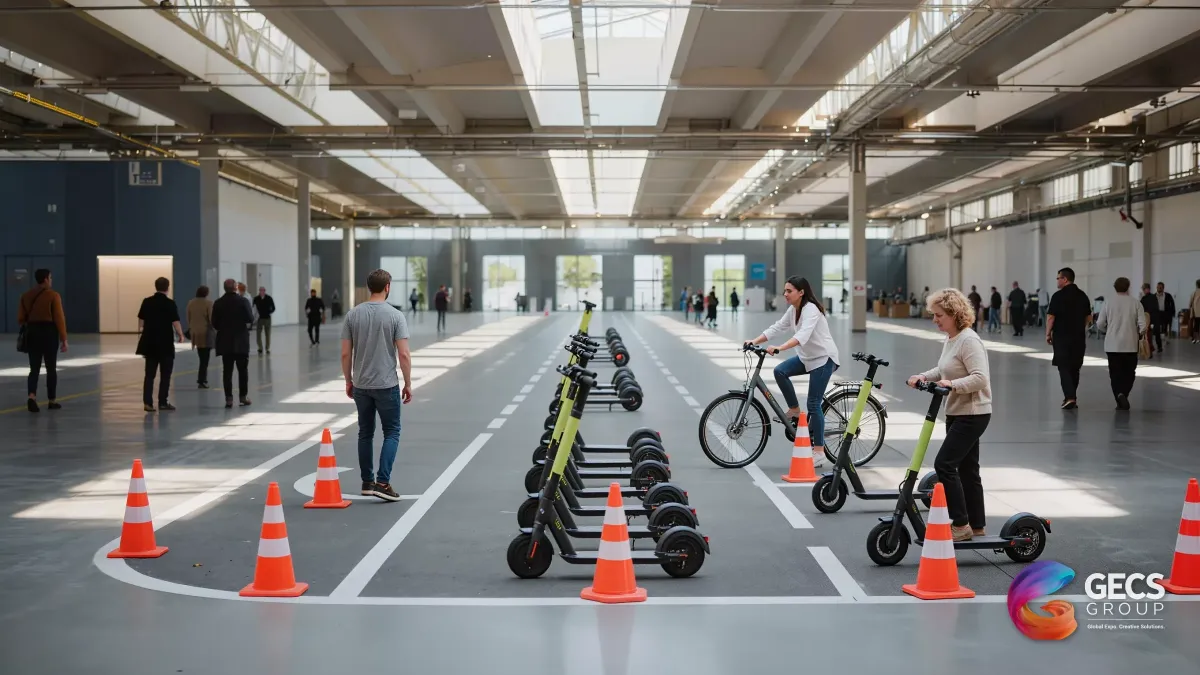
- Bicycles and e-bikes, with areas dedicated to electric and urban mobility.
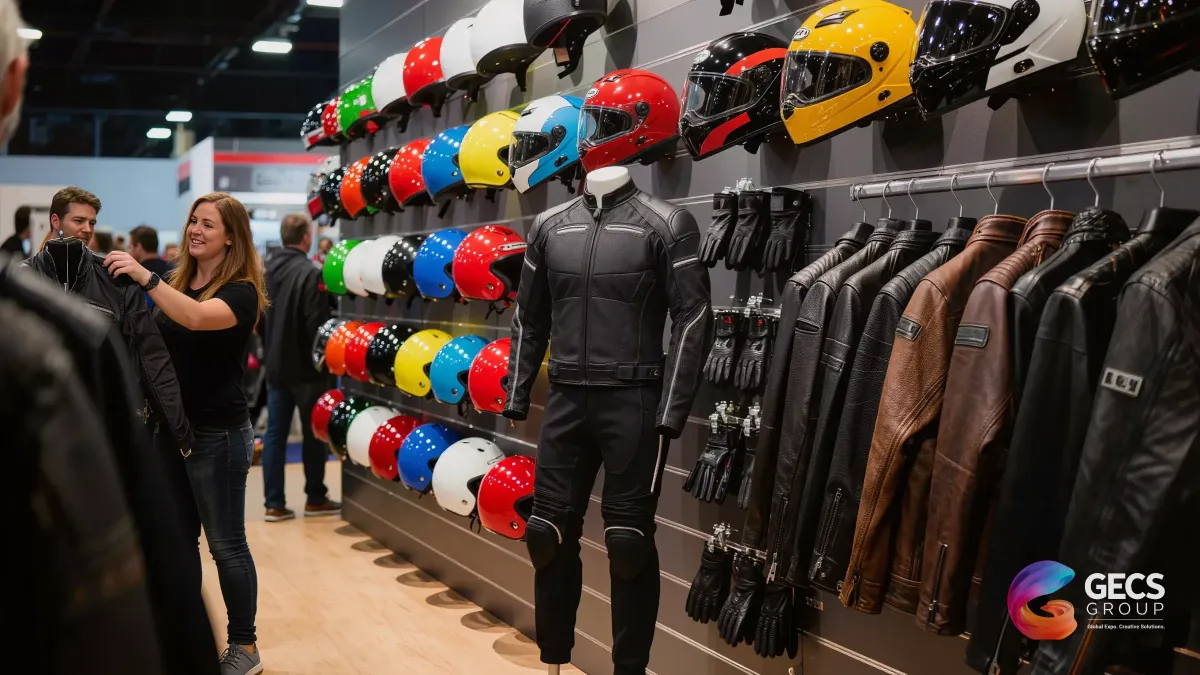
- Clothing and protection: jackets, gloves, boots, helmets and airbags.
- Spare parts, accessories and components for workshops and retailers.
- Technology and services: connectivity, safety, insurance, rental.
- Events and shows: presentations, performances, meetings with riders and teams. For the 2026 edition the route of the 2027 Dakar was presented.
This mix explains something important for those building stands: at EICMA there are not only big brands with stands of hundreds of square metres, but also thousands of small and medium companies with reduced spaces that need to get noticed.
🏗️ How to exhibit at EICMA
Participation as an exhibitor is decided months ahead, with the participation request to the organiser and the allocation of space. The area changes depending on product category, hall and position. The big manufacturers have historic spaces; the others adapt to what is left.
- Submit the participation request according to the organiser's calendar.
- Receive the assignment of hall, floor area and position.
- Read the technical regulation of the venue and that of the event.
- Define the stand project with the real dimensions.
- Order electrical connections, network, water and services by the deadlines.
- Book the loading slot and access permits.
- Produce and pre-assemble in the workshop.
- Assemble, test, finish and hand over before opening.
- After the fair: dismantling on time and return of the area.
⏱️ The constraint that matters
At EICMA assembly has a fixed deadline: opening for trade visitors. There is no "extra day". That is why it pays to work with pre-assembled structures and a precise loading plan.
🎯 Which stand works at EICMA
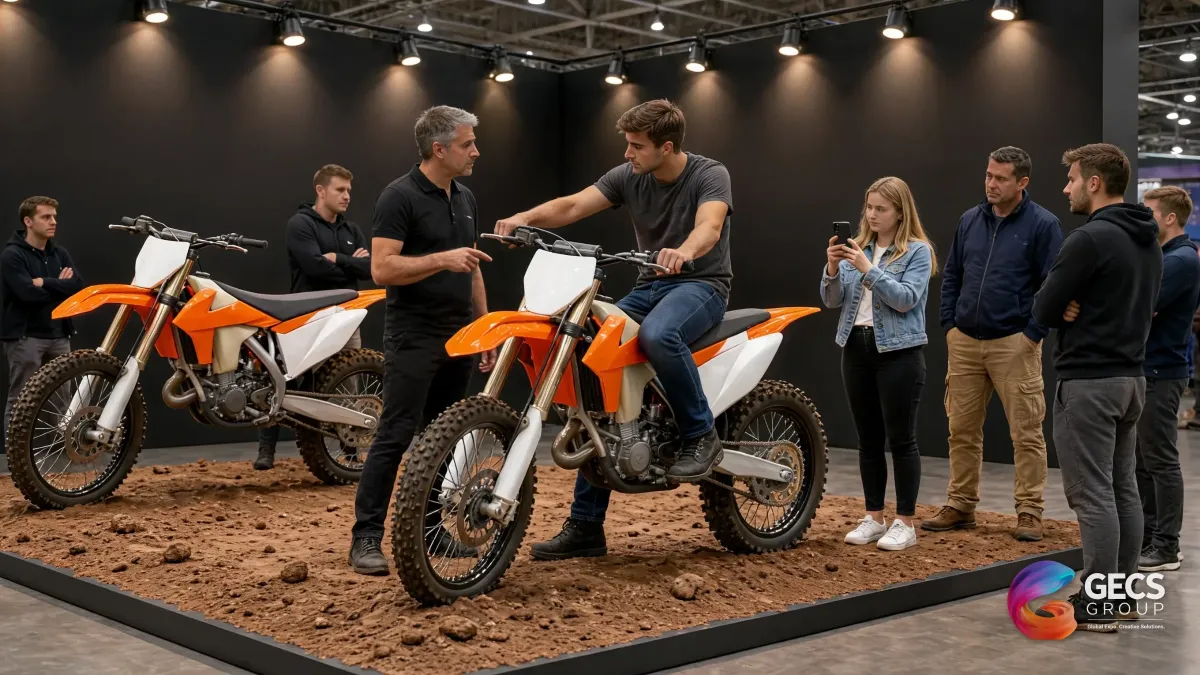
The EICMA visitor wants to see, touch and sit on the product. This changes the design compared with a display-only fair. The choices that pay off most:
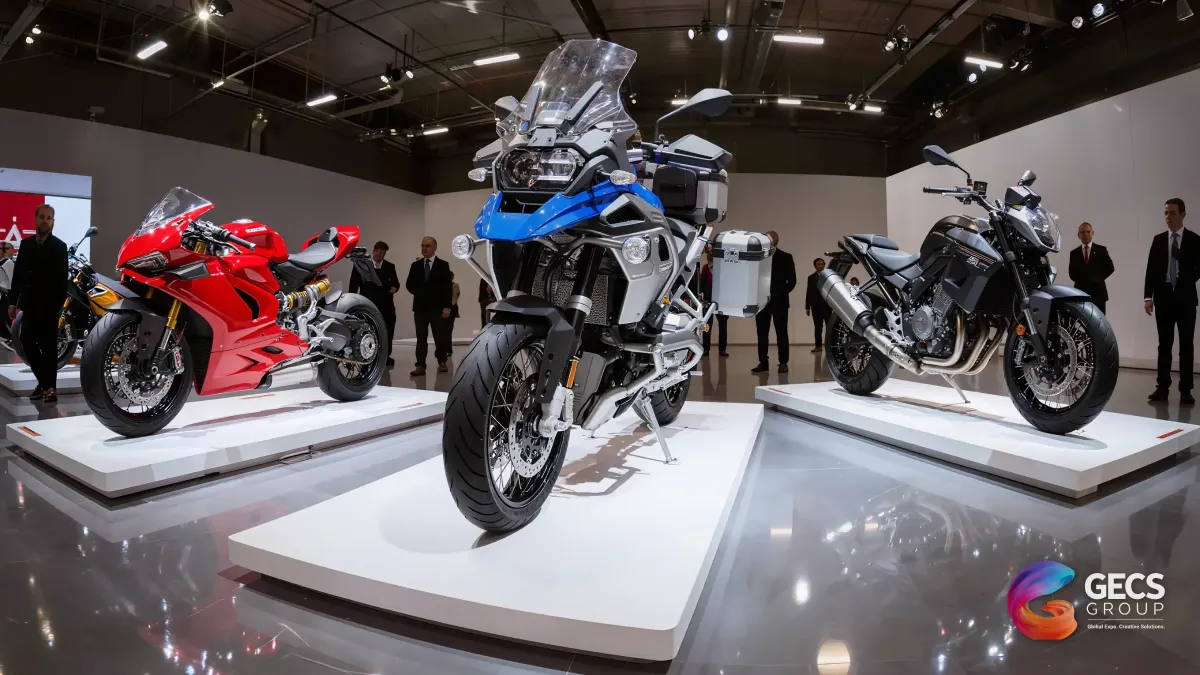
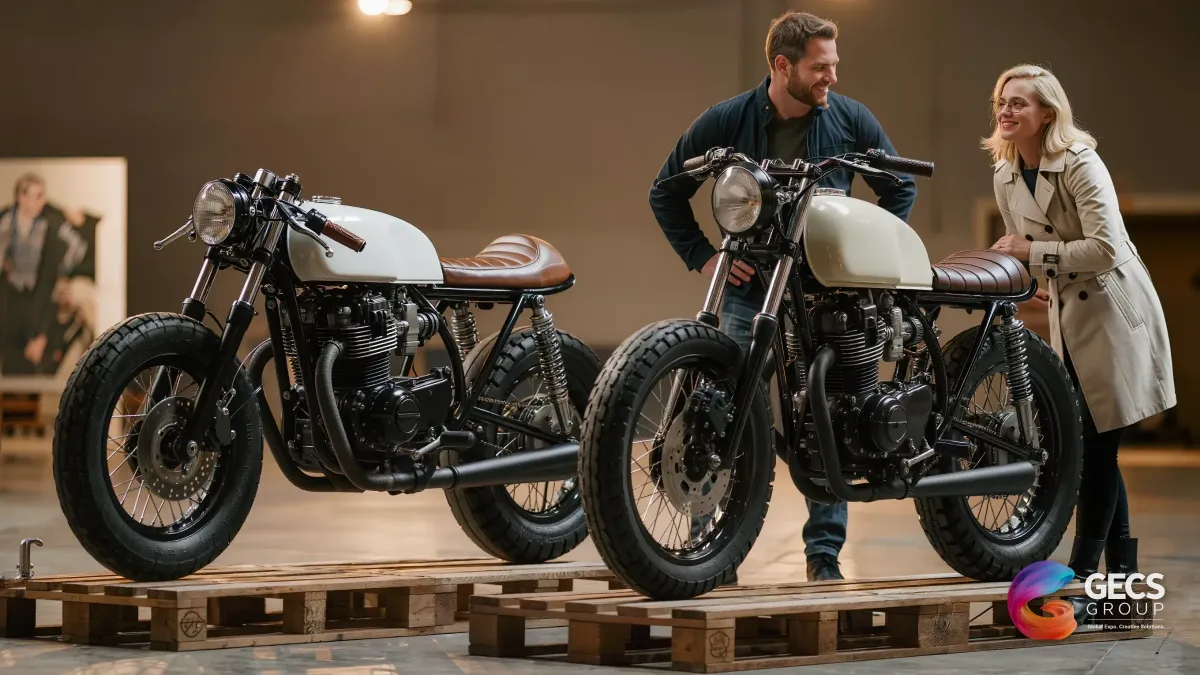
- Podiums and bases. The motorcycle is the object: it must be raised, lit and reachable from several sides. Platforms with illuminated edges and clean finishes bring out the product.
- Circulation space. On public days the crowds are huge. Wide aisles and clear access points avoid queues in front of the stand.
- Targeted light. Spots on the product, a darker environment around, tones consistent with the brand.
- A business corner. For trade visitors and buyers you need a place to sit and talk, even a small one, even just a table and two seats.
- Reduced storage. A back-of-stand area for spare parts, information material and clothing avoids invading the front.
- Sturdy structures. The weight of a motorcycle and the passage of many people require solid floors, podiums and connections.
Custom or modular stand?
For those who exhibit every year, a well-designed modular stand is an investment that can be reused: the layout changes, the structure and podiums remain. For those at their first participation, or with a very particular product, a custom project lets you give a strong identity with few elements.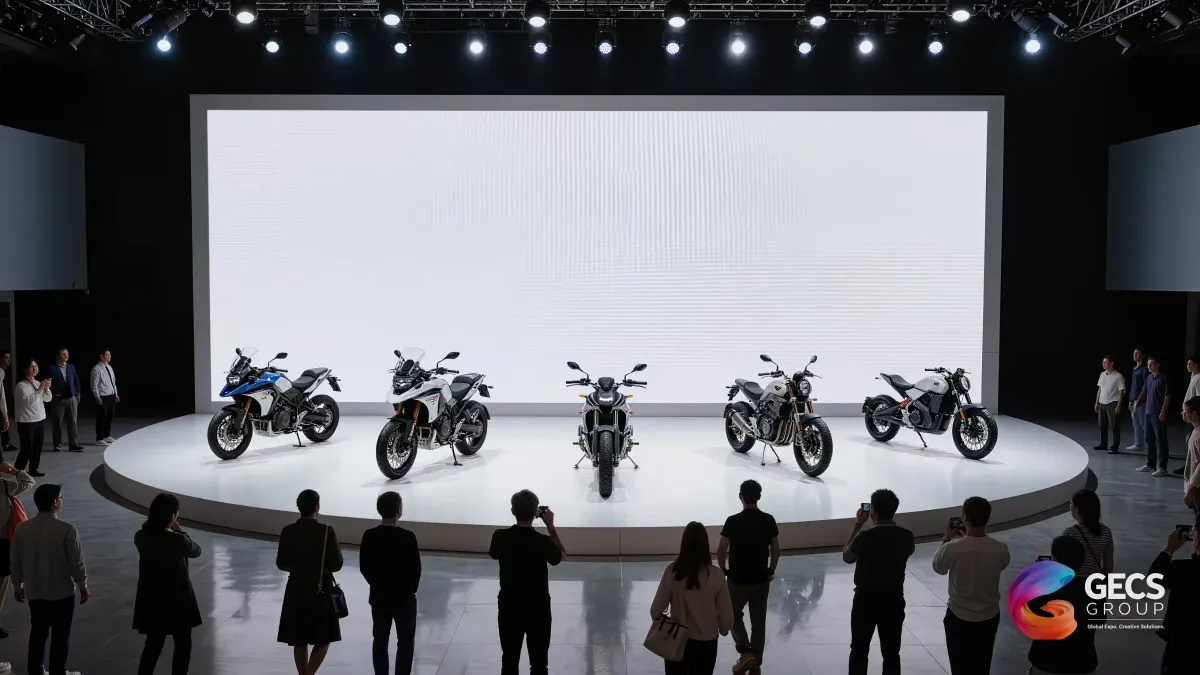
👥 Who visits EICMA and what they expect
Knowing the visitor helps design better. At EICMA at least three types of people arrive, with very different needs.
- The trade professional. Dealer, distributor, buyer. They look for terms, catalogues, contacts. They have little time and many appointments. They want to sit down, talk numbers and leave with a contact.
- The journalist. They look for the novelty, the photo, the statement. They need a clearly visible product, a press contact and material that is easy to pick up.
- The enthusiast. They arrive on the days open to the public, in a group or with the family. They want to get in the saddle, take a photo, buy an accessory, take home a souvenir.
A successful stand at EICMA answers all three without mixing the flows: a quiet, reserved business area, an open and photogenic product zone, a welcome point for those asking for information.
🚛 Logistics and assembly: how a fair week is organised
A fair of this size requires a precise logistics machine. The typical calendar of a stand, at the big Rho fairs, always follows the same pattern, even if the exact days are set by the organiser edition by edition.
- Weeks before. Approved project, production in the workshop, dry test of the main structures, preparation of the graphics.
- Build-up days. Arrival of vehicles in the assigned slots, unloading, assembly of structure, podiums, walls and utilities. On peak days the venue is crowded with vehicles and teams: punctuality is everything.
- Last day before opening. Placing of products, finishing, cleaning, checking of lights and connections.
- During the fair. Technical presence for any interventions, restocking, cleaning of the stand.
- Dismantling. Starts when the fair is closed and must finish within the time allowed. Packaging and waste material must be handled according to the venue's rules.
Why it pays to pre-assemble in the workshop
At a fair where every exhibitor builds in the same period, time in the hall is the scarcest resource. What can be done in the workshop should not be done at the fair: cutting, painting, wiring, trial assemblies. On site only the final assembly operations remain, and the result is a more precise stand and a less stressed team.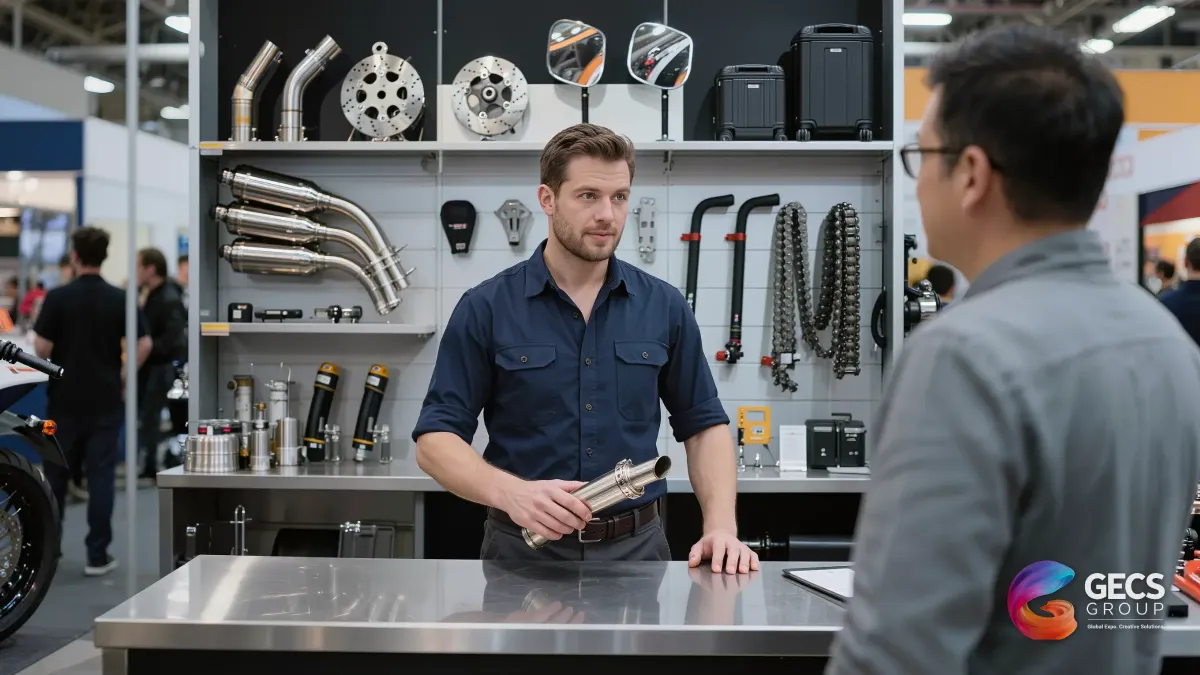
⚠️ The most common mistakes
- Designing without the real dimensions. The organiser's floor plan has constraints (columns, connections, maximum heights) that change the design.
- Underestimating weight. A motorcycle, a podium, a loaded display case require calculated structures, not improvised ones.
- Ordering connections at the last minute. Power, network and compressed air are booked by precise deadlines.
- Forgetting access permits. Without a pass, vehicles and staff do not get in.
- Neglecting light. In a hall with uniform general lighting, a stand without its own light disappears.
- Not planning storage. Excess material ends up at the front and ruins the impact.
💶 Budget: what really weighs
The cost of a stand at EICMA depends on floor area, position, finishes and number of days. It is made up of different items:
- Exhibition space, paid to the organiser per square metre.
- Design and production of the stand, if it is not pre-built.
- Connections and services (electricity, network, compressed air, cleaning).
- Logistics: transport, porterage, storage of packaging.
- Staff and travel for assembly and on-site presence.
- Dismantling and handling of materials.
To set the budget look at the stand prices page or write to us with floor area and hall: the quote is broken down item by item.
✅ Checklist for exhibitors
- Check the official dates when the organiser publishes them.
- Submit the participation request within the deadlines.
- Ask for the floor plan with dimensions and positions of connections.
- Verify the reaction-to-fire constraints for materials.
- Prepare podiums and bases suited to the weight of the products.
- Plan lighting and power points.
- Book the loading slot and entry permits.
- Organise accommodation and travel for the build team.
- Allow for dismantling and removal of empties.
- Keep all confirmations in writing.
♻️ Reuse and sustainability of the stand
More and more exhibitors ask for structures that survive several editions. For an annual fair like EICMA, reuse makes economic as well as environmental sense: the same supporting structure can change graphics, furniture and layout every year. Modular panels, reusable profiles and packaging designed for transport reduce waste and storage costs. At the end of the fair it pays to dismantle carefully, catalogue the components and store them in an orderly way: next year's work is already half done.
In practice, those who think about reuse from the design stage spend more the first time and much less from the second. It is a choice to assess with the supplier before approving the drawing, not after.
🔗 Related pages
- Fiera Milano Rho, the guide to the venue that hosts EICMA
- Allianz MiCo, Milan's congress centre
- Trade fairs in Italy 2027, the guide to the whole country
- Trade fair calendar, to plan the year
- Stand prices, to set the budget
❓ Frequently asked questions about EICMA
1What is EICMA?
It is the great international bicycle and motorcycle fair, held every year in Milan.
2Where is it held?
At Fiera Milano Rho, the exhibition district on the edge of Milan.
3When was the last edition held?
The 83rd edition was held from 3 to 8 November 2026.
4When will EICMA 2027 be?
The official dates have not yet been published by the organiser. It is best to wait for the EICMA S.p.A. announcement.
5Which days are reserved for trade visitors?
In the 2026 edition the first two days, 3 and 4 November, were reserved for press and trade professionals; from 5 to 8 November the fair was open to the public.
6How many visitors does EICMA have?
For the 2026 edition the organiser reported over 600,000 attendances.
7How many exhibitors take part?
About 765 exhibitors from 52 countries, with about 2,100 brands present.
8What kind of stand is needed?
One with solid podiums, targeted light on the product, wide circulation space and at least one business corner to meet trade visitors.
9Can I use a modular stand?
Yes. A well-designed modular structure adapts to different floor areas and can be reused over several editions.
10How long does assembly take?
It depends on the floor area and the window granted by the organiser. In any case, assembly must be finished before opening to trade visitors.
11Who can build my stand at EICMA?
Our team: we design, produce in Padua and assemble at Rho. Tell us the floor area, hall and budget.
✅ The result: a stand ready for day one
EICMA rewards those who arrive on time with a clear project. If you want to exhibit at the next edition, write to us: we will tell you what is needed, in how much time and with what budget.
Figures gathered from official organiser releases and the fair's website, November 2026. Always check the updated calendar before booking.
Do you want to exhibit at EICMA?
Tell us the hall, floor area and budget: we design, produce in Padua and assemble at Fiera Milano Rho. A clear quote, broken down item by item.
Have a project?
Tell us about your idea — our team will get in touch and help bring it to life.